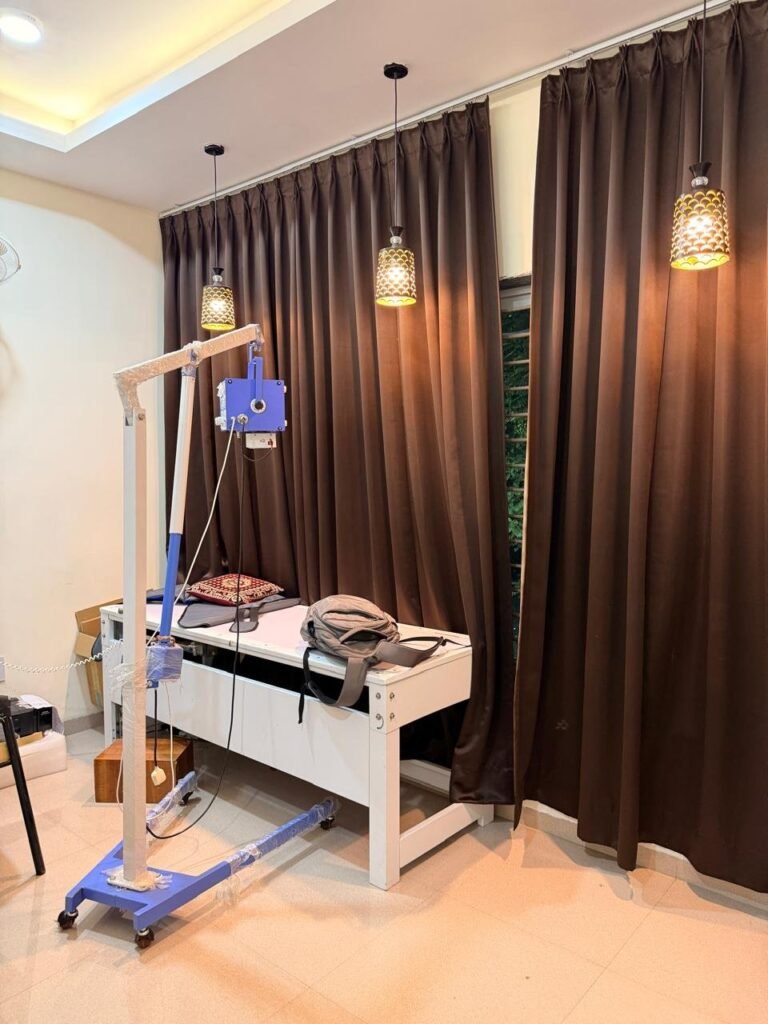
Spinal decompression is a traction-based approach used for selected spinal conditions, as part of an overall, assessment-led care plan. [VERIFY: confirm this equipment is currently available at the clinic before publishing availability.]
Spinal decompression uses controlled, table-based traction intended to gently unload parts of the spine. It is used within a broader rehabilitation plan rather than on its own.
Why it may be considered
It may be considered for certain presentations after assessment — for example some disc-related or nerve-irritation symptoms — where a clinician judges it appropriate and safe.
Common reasons people seek assessment
These are reasons to seek a professional assessment — not a promise that a specific treatment will suit everyone.
Selected disc-related back or neck symptoms
Nerve-irritation symptoms suited to a graded approach
As one component of a wider rehabilitation plan
How it generally works
During a session you lie comfortably on a specialised table while controlled traction is applied. Sessions are combined with exercise and advice. Your clinician explains what to expect and monitors your response.
What an appointment may involve
1
Assessment to determine suitability.
2
Explanation of the approach and expected sensations.
3
A guided session on the decompression table.
4
Integration with exercise and review of response.
Precautions & when further assessment is needed
Decompression is not suitable for everyone. Conditions such as certain fractures, significant osteoporosis, some tumours or infections, pregnancy and certain implants may be contraindications. Suitability is determined after assessment, and we do not guarantee outcomes.