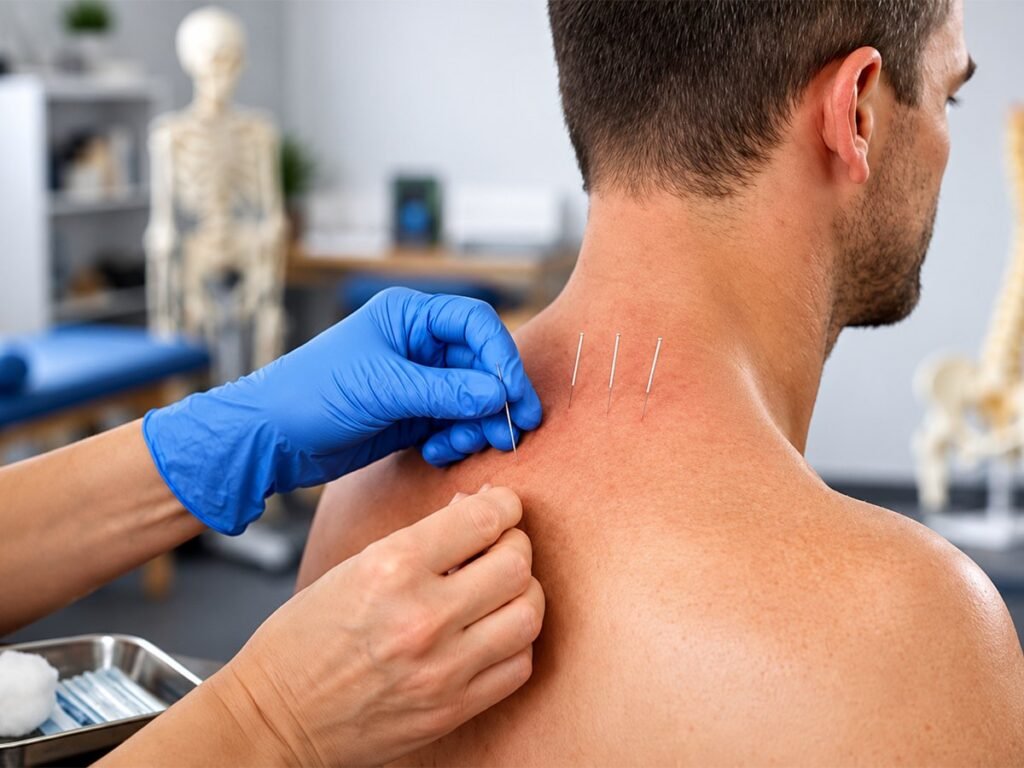
Dry needling uses fine, single-use needles to target muscular trigger points, performed by a suitably trained clinician as part of a wider plan. [VERIFY: confirm this equipment is currently available at the clinic before publishing availability.]
Dry needling involves inserting fine sterile needles into specific muscular points to influence tension and discomfort. It is distinct from acupuncture in its framework and intent.
Why it may be considered
It may be considered for certain muscular or trigger-point–related symptoms, alongside exercise and manual therapy, where assessment suggests it is suitable.
Common reasons people seek assessment
These are reasons to seek a professional assessment — not a promise that a specific treatment will suit everyone.
Localised muscular tightness or trigger points
As an adjunct to exercise-based care
Selected tension-related presentations
TREATMENT · Dry Needling
Ratio 4:3
How it generally works
After assessment and consent, fine single-use needles are inserted briefly into targeted points. You may feel a brief twitch or ache. It is combined with exercise and advice.
What an appointment may involve
1
Assessment, explanation and informed consent.
2
Identification of target points.
3
Brief, hygienic needling using single-use needles.
4
Exercise guidance and review.
Precautions & when further assessment is needed
Performed only by a suitably trained clinician using single-use, sterile needles. It may be avoided with certain bleeding disorders, needle phobia, some skin conditions, or during pregnancy in certain situations. Suitability and consent are confirmed beforehand.